

Beauty Pop-Ups and Beauty Tours: How Skincare Brands Plan a Pop-Up (2026 Guide)
A beauty pop-up puts your product in people’s hands in a space built to be photographed: a glass truck outside Sephora, an Airstream at an outdoor mall, a froyo truck on a summer plaza or a garden inside Grand Central. This guide covers the main beauty pop-up formats, how to plan a single-day pop-up or a multi-city beauty tour, what drives the cost and what to measure, with photos from activations we built and ran for Farmacy × Sephora, Biodance and Tatcha.
- The best beauty pop-ups give guests three things: a reason to stop, the product in their hands and a photo worth posting.
- A vehicle can be a one-day moment (Farmacy) or a multi-city tour (Biodance). A built environment can hold a landmark room (Tatcha).
- Design the photo moment as carefully as the product display. It is where most of the content comes from.
- Pair the pop-up with a retail partner when you can: it turns attention into sales.
- Plan for the line. Queue design, staffing and sampling speed decide the guest experience.
Why beauty brands do pop-ups
Skincare and makeup are bought on texture, scent and trust, which is hard to deliver through a screen. A pop-up lets people try the product, talk to the brand and leave with a sample. It also produces content: every guest with a phone becomes a camera crew, and a strong set turns into thousands of posts. For brands that launched online, like Biodance, a pop-up turns digital demand into a real-world line.
Four beauty pop-up formats
1. Glass truck outside a retailer
A glass truck parked beside a store is a moving window display. Biodance launched its tour beside Sephora SoHo, with shelves, LED and a photo booth inside the glass.
2. Airstream beauty tour
An Airstream reads as a boutique on wheels. For Biodance we built a pink gullwing Airstream that traveled to Los Angeles, Austin and Miami with the same brand world at every stop.
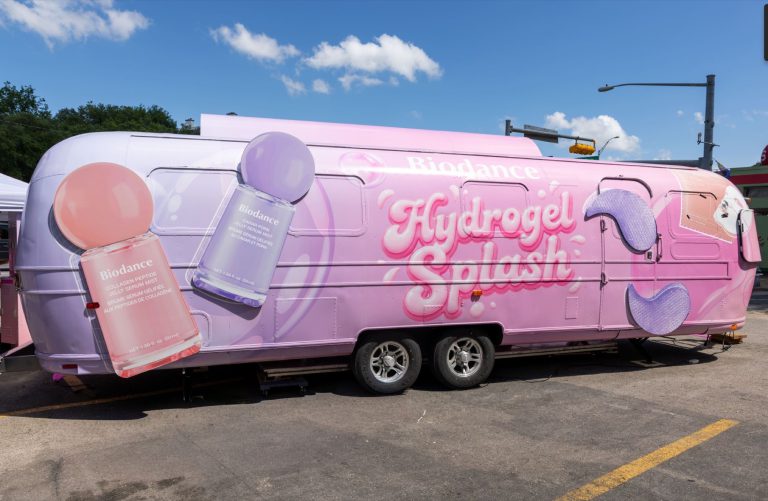
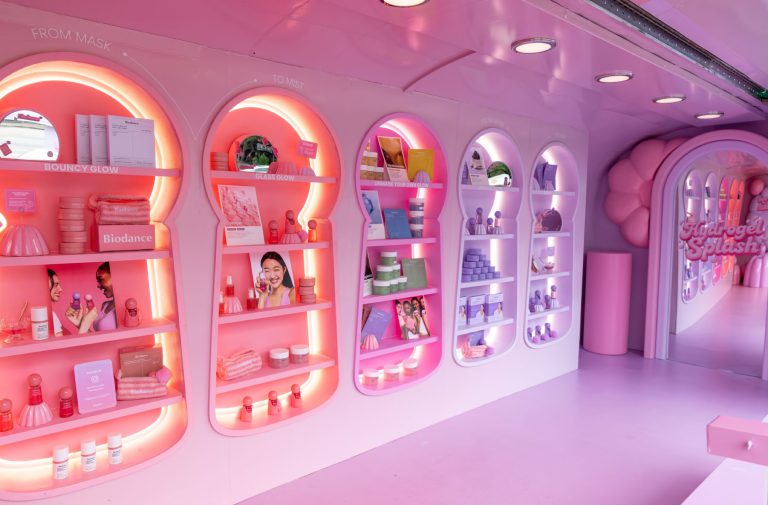
The Biodance Airstream and its CNC-milled shelving with contour LED.
3. Vintage truck with a treat
A restored vintage truck and a free treat draws a crowd fast. For Farmacy × Sephora we served froyo from a 1949 Kurbmaster with a lawn lounge beside it. See our vintage trucks and culinary development.
4. Built environment in a landmark space
When the brand needs a room, not a vehicle, we build one. For Tatcha we fabricated a tea pavilion, stone path and moss garden inside Grand Central’s Vanderbilt Hall in seven days. See branded pop-up fabrication.
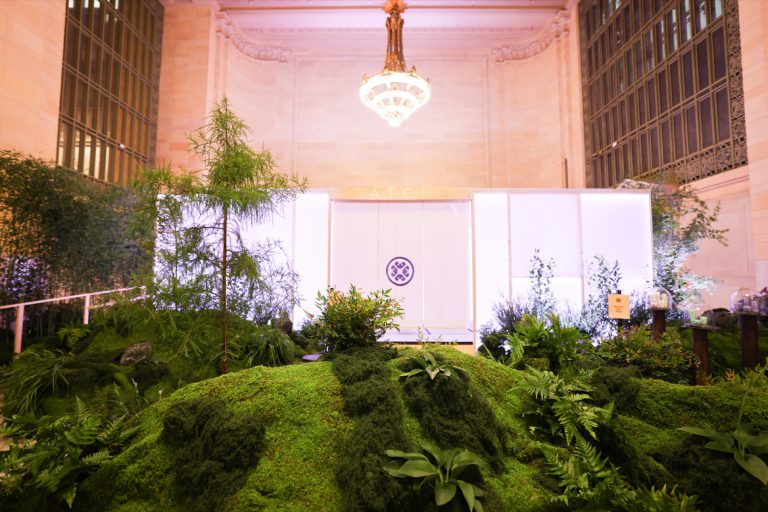
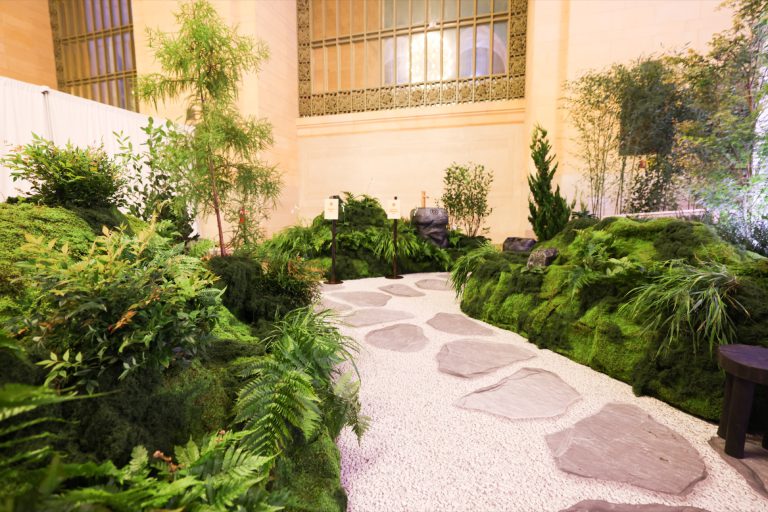
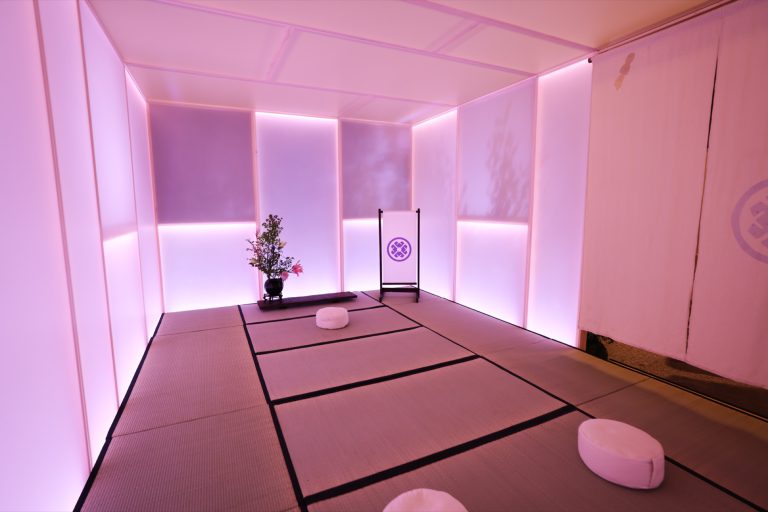
Tatcha at Grand Central: the moss garden, the roji path and the tea room.
Planning a beauty launch or tour? Tell us the product, the cities and the date and we will suggest a format.
Case study: a one-day froyo truck for Farmacy × Sephora
For “Something Real Summer,” Farmacy and Sephora wanted to promote the Green Clean cleansing balm with a summer-afternoon feel. With the agency Overnight, we wrapped our 1949 Kurbmaster in Farmacy’s cream, sage and olive, added a serving window, a scalloped awning and a mirrored menu, and built a lawn lounge with a picket fence, striped umbrellas and lounge chairs. Our culinary team developed three froyo flavors, and the line wrapped around the block at the Chelsea Triangle all day on August 8, 2026.
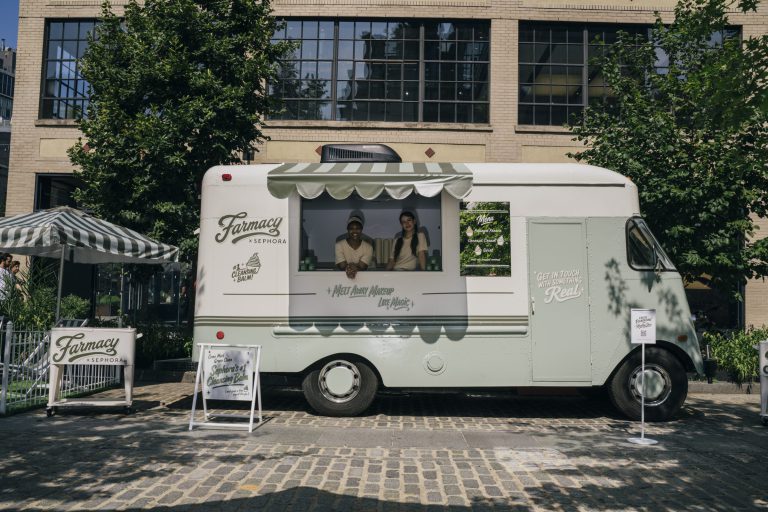
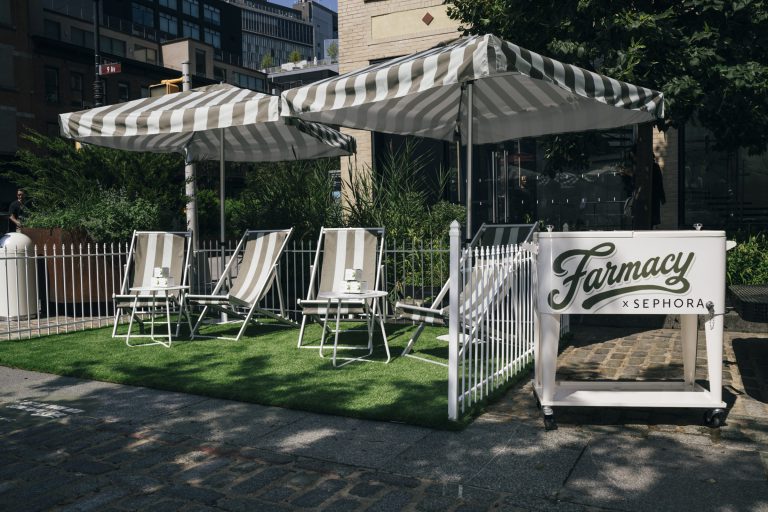
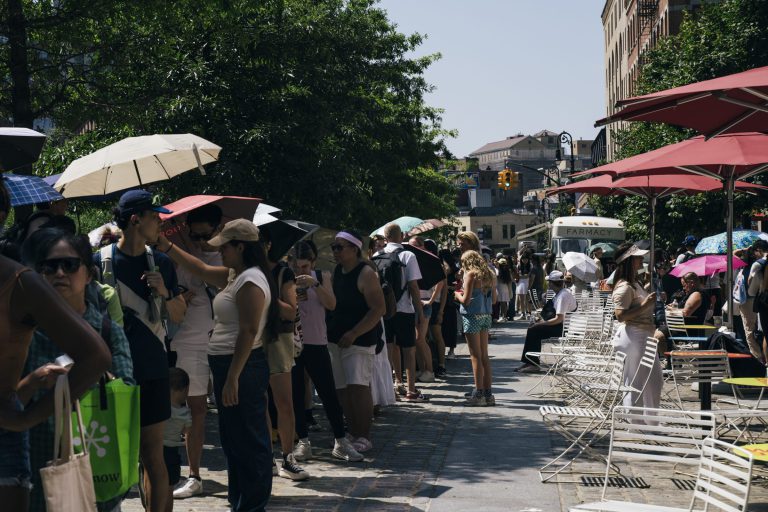
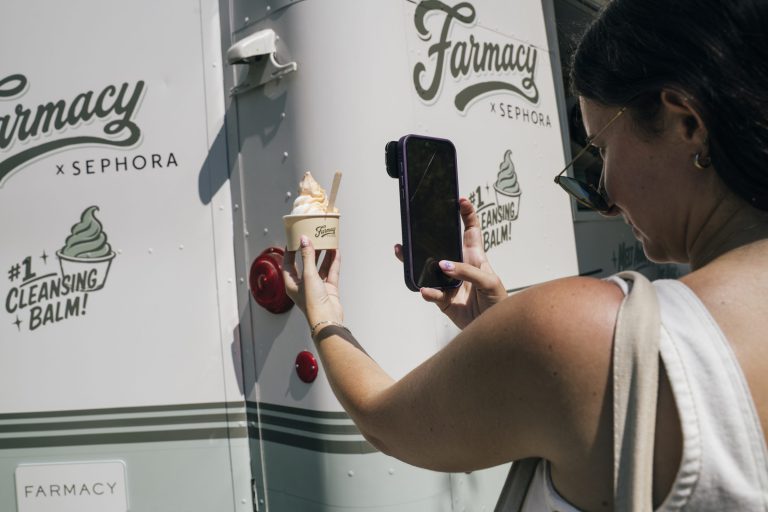
The Farmacy truck, the lawn lounge, the line and guests at the window. Photos: Annie Forrest.
Read the Farmacy case study or see the full photo gallery.
Case study: a four-city Biodance tour
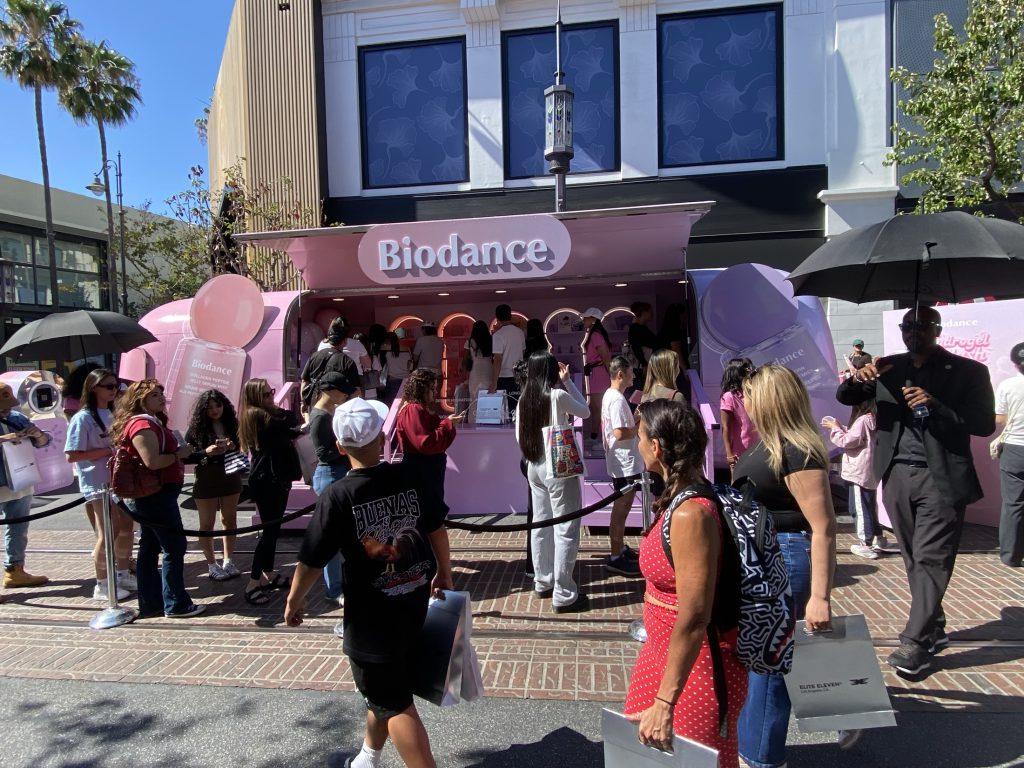
With the agency Seen Group, we designed, built and ran Biodance’s U.S. tour: a glass truck at Sephora SoHo in New York, then a custom gullwing Airstream at The Grove in Los Angeles, in Austin and at Aventura Mall in Miami. The centerpiece was a photo booth we engineered with a built-in mister that sprays a fine product mist as it takes the picture. It captured more than 7,000 photos, with up to 2,000 visitors a day.

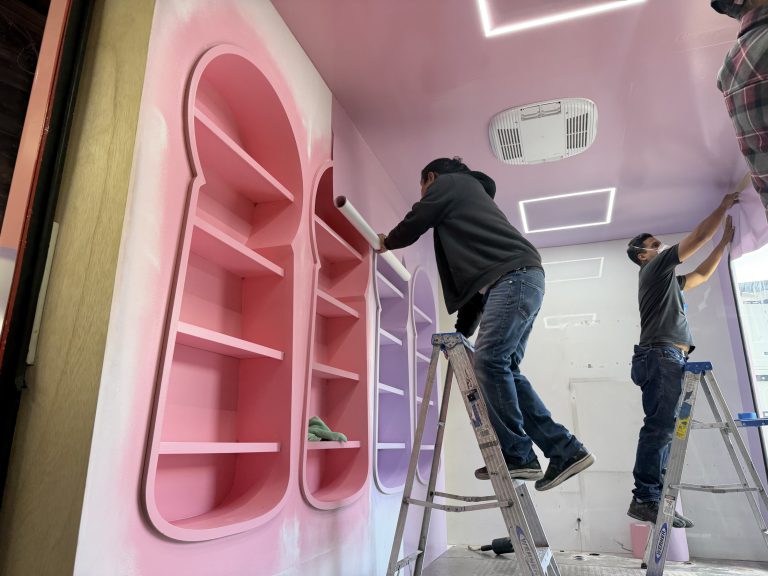
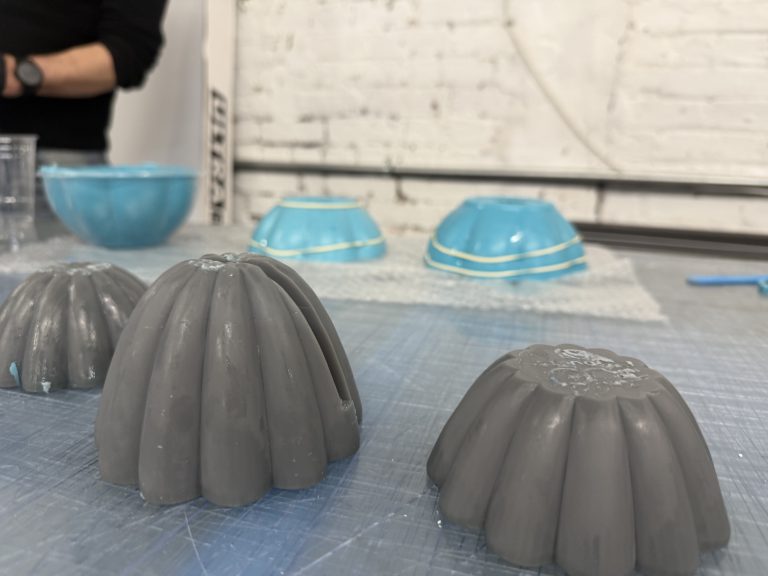
The mister photo booth, shelving going in and cast jelly elements in our shop.
Read the Biodance case study.
How to plan a beauty pop-up
1. Pick one hero product
A pop-up works best around one product and one action: try the balm, take the mask, get the mist. Everything in the set should point to it.
2. Choose the format and the location together
A sidewalk beside a retailer suits a glass truck. A mall or plaza suits an Airstream or a truck with a lounge. An indoor landmark needs a built environment and venue approvals.
3. Plan sampling and giveaways
Decide what every guest gets and what the first 100 get. Keep samples close to the exit so the line keeps moving.
4. Design for the line
Queue signage, shade, a host at the front and a clear flow from entry to photo moment to exit. Lines are part of the experience, so make them look good too.
5. Permits and approvals
Street, plaza and park permits in New York take time, and food or drink adds health requirements. Landmark venues add fire and structural submissions.
6. Staff and train
Brand ambassadors who know the product, servers if there is food, and a production lead on site all day.
Designing the photo moment
- Use the brand palette at full scale: Farmacy’s sage stripes, Biodance’s pink jelly world.
- Give people something to do: sit in the lounge, press the mist button, hold the froyo up to the truck.
- Light it for phones: shade outdoors, LED indoors.
- Put the logo where it ends up in the frame, not just on the vehicle.
Timeline and cost
A one-day truck activation with a fleet vehicle can be ready in a few weeks. A custom built environment or a multi-city tour usually needs 6 to 10 weeks for design, fabrication, approvals and logistics; Tatcha’s garden was fabricated in seven days once the design was set. Cost depends on the vehicle or build, food and sampling, permits, staffing and the number of days and cities. Using a vehicle from our fleet and rebranding it is the fastest and most affordable route. For multi-city planning, see our mobile marketing tour guide.
What to measure
- Guests per hour and peak line length
- Samples handed out and products sold at the retail partner
- Sign-ups and opt-ins captured at the pop-up
- Photos captured (Biodance’s booth logged more than 7,000) and social posts
- Press and creator coverage
Frequently asked questions
What is a beauty pop-up?
A beauty pop-up is a temporary branded space, often a truck, Airstream or built set, where guests try a beauty or skincare product, get a sample and take photos, usually for a launch or campaign.
How long does it take to plan a beauty pop-up in New York?
A one-day vehicle activation can be ready in a few weeks. Custom builds, landmark venues and multi-city tours usually need 6 to 10 weeks.
Can a beauty pop-up serve food or drinks?
Yes. We develop menus and serve food and drinks from our own trucks and carts, like the Farmacy × Sephora froyo, with the permits and food-safety requirements handled.
Should a beauty tour use a truck or an Airstream?
A glass truck works well beside a store on a city street. An Airstream is better at malls and outdoor destinations where guests can step inside and browse.
How do you measure a beauty pop-up?
Track guests, samples, sales at the retail partner, sign-ups, photos captured and social posts, and compare stops if it is a tour.
NVS Visuals designs, fabricates and runs beauty pop-ups and tours in-house: vehicles, builds, graphics, food and logistics. See our retail and beauty pop-ups or request a quote.