

Tech Roadshows: How to Plan a B2B Mobile Tour for AI and Tech Brands
A tech roadshow takes your product demo out of the booth and on the road: a branded trailer, bus, van or glass truck that parks outside conferences, customer offices and campuses and turns into a briefing room, a demo lab or a lounge. This guide covers how B2B and AI companies plan a tech roadshow, which vehicle fits which goal, what it costs and how to measure it, with photos from tours we built and ran for DDN, NVIDIA and Supermicro, Snowflake, Seedtag, SanDisk and Roku.
- A tech roadshow works best when it follows your buyers: conferences, customer HQs and the cities where your pipeline is.
- Pick the vehicle by what happens inside: a full demo room needs an expandable trailer; a coffee-and-sign-up stop needs a van.
- Plan the AV, power and connectivity first. A 33-foot LED wall on a highway is an engineering job, not a decor job.
- Measure meetings and pipeline, not foot traffic.
- One team for vehicle, build, graphics, AV and logistics is what makes a 45-day launch possible.
What is a tech roadshow?
A tech roadshow (also called a B2B mobile tour, technology tour or demo tour) is a branded vehicle that travels a planned route and opens as a private experience at each stop. Inside are the things a booth can’t hold: a full-size product demo, a quiet room for executive briefings, a rooftop for hospitality after the keynote. Because it brings its own space, it can show up outside a sold-out conference, in a customer’s parking lot or on a city plaza a block from the venue.

Why tech brands take the demo on the road
You control the room
Trade-show floors are loud, crowded and identical. A roadshow gives you your own lighting, sound, seating and content, and your sales team gets the full attention of the people they invited.
You go where the buyers are
The same build can visit a conference in San Jose, a customer summit in Boston and an industry event in Minneapolis. You pay for the experience once and use it in every market.
Partners can share the space
Ecosystem tours are common in AI and cloud. The AI Factory trailer carried DDN, NVIDIA and Supermicro branding in one environment, with graphics that could change between stops.

It photographs well
A glass storefront, an LED wall or a robot on board gets filmed and posted, which extends the reach of every stop past the people who walked in.
Planning a tech or AI roadshow? Send us your cities and dates and we will come back with vehicle options and a timeline.
Five tech roadshow formats
1. Expandable trailer: the demo room
Our 38-foot expandable trailer opens into a 16′ × 38′ room with a glass storefront, an LED wall and a rooftop deck. Best for AI, data and enterprise demos, executive briefings and partner showcases.


Night and day: the trailer open at GTC, and guests watching demo content on the LED wall.
2. School bus: the corporate office tour
For Snowflake, we rebuilt a school bus as an Aspen ski lodge with wood paneling, a faux fireplace, a mountain lightbox, two inset TVs and a rear video wall running demo content. Over four days it visited offices including Goldman Sachs and JPMorgan in Manhattan and Jersey City, serving iced coffee and fresh popcorn and capturing leads on iPads.
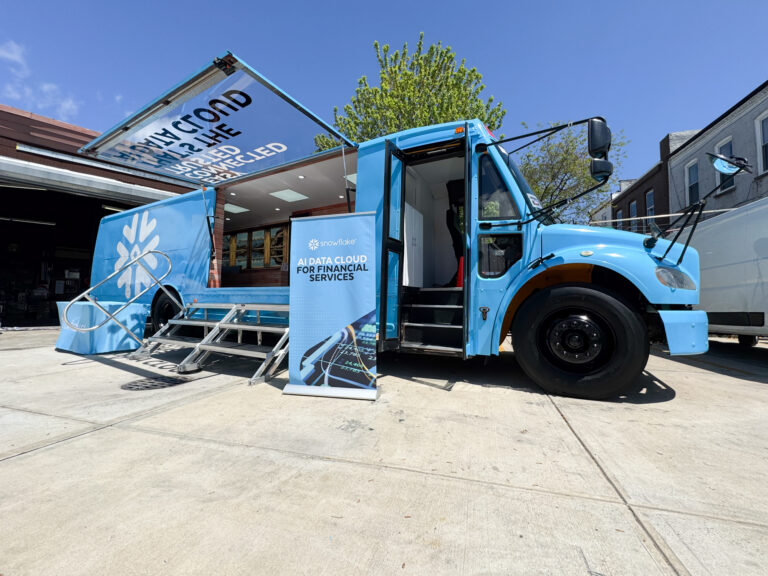
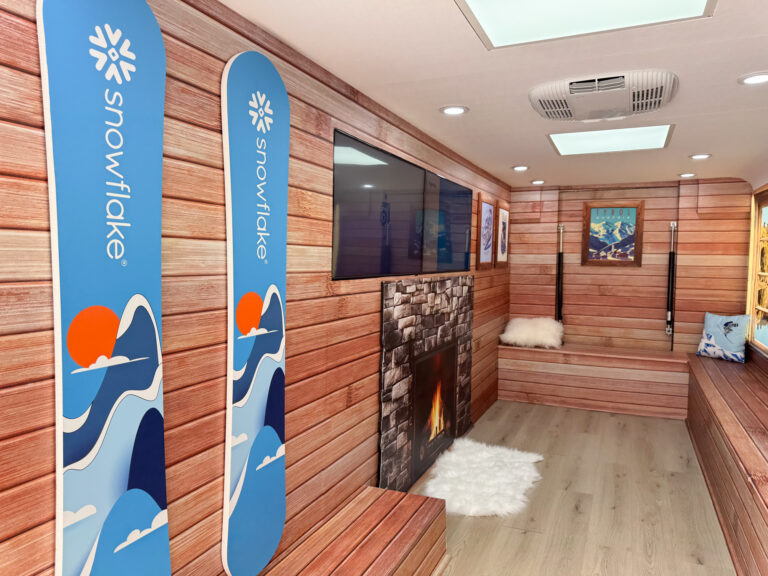
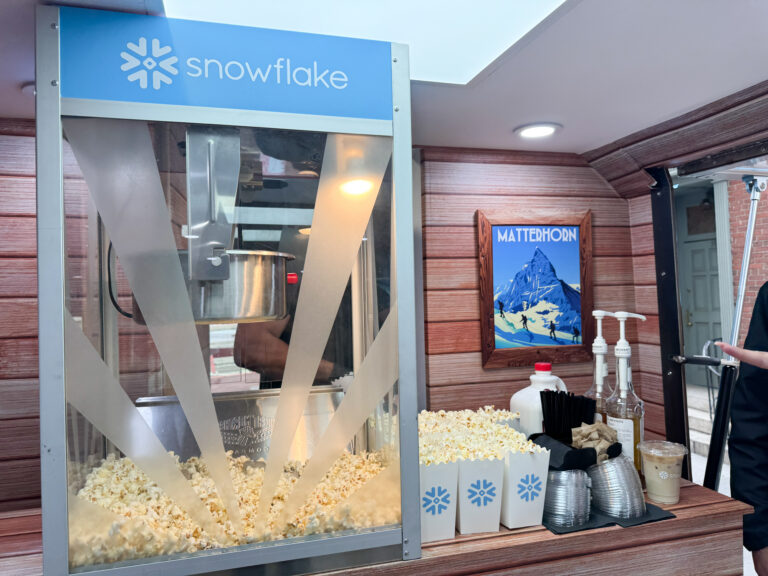
The Snowflake bus: exterior, lodge interior and the coffee and popcorn station.
3. Glass truck: the street media moment
For Seedtag’s Connected TV campaign during Advertising Week, a glass truck carried a living room with a family watching TV, some of them robots and two of them live performers. It drove through Lower Manhattan and DUMBO while crowds filmed through the glass.
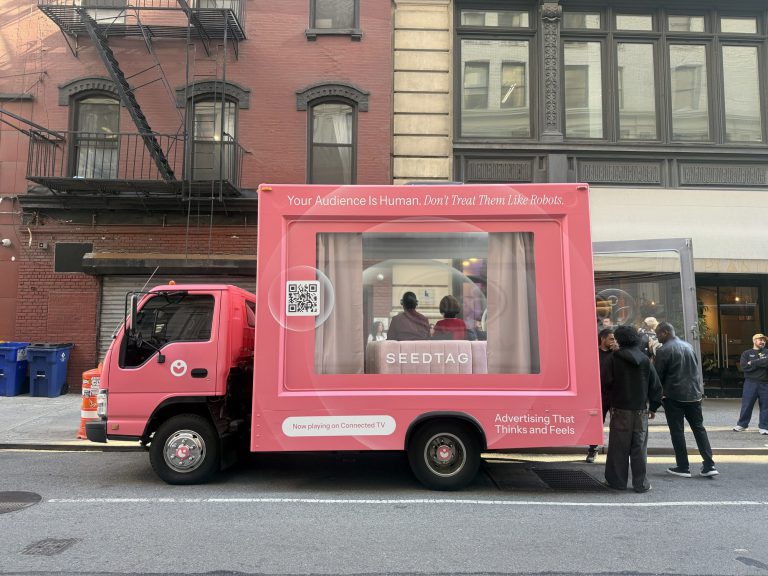
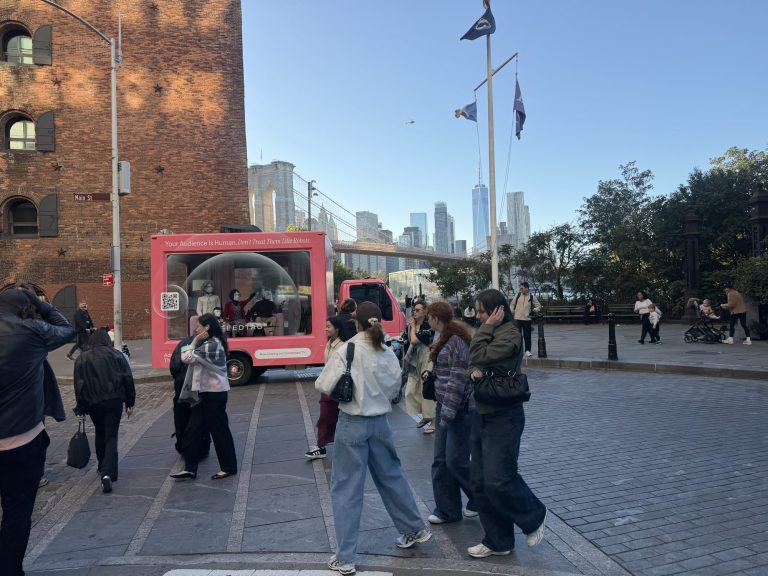
The Seedtag glass truck on the street and in DUMBO.
4. Promo van: the agile pop-up
SanDisk’s branded Sprinter visited SoHo, Union Square and DUMBO with coffee, a spin wheel and USB-C giveaways, and doubled as a set for the brand’s film crew. It went from concept to street in 48 hours.
5. Campus van: the consumer tech sign-up machine
For Roku at NYU, a van with a dorm-room photo op, LED lighting and a coffee bar collected more than 1,000 student sign-ups in four hours, with 600+ coffees served and giveaways at the top of each hour.
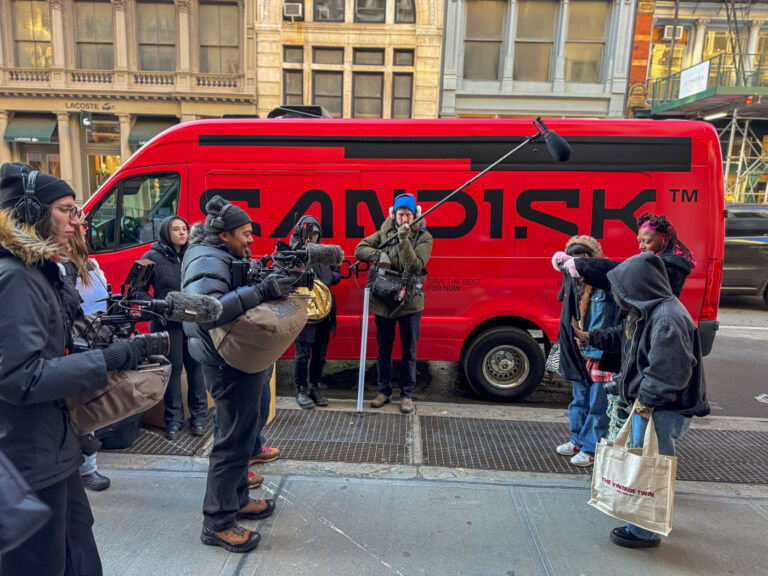
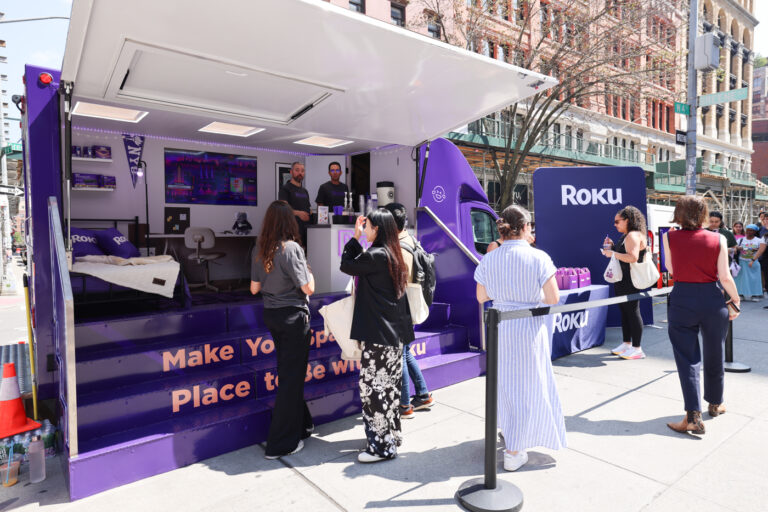
SanDisk's van in SoHo and the Roku campus van at NYU.
Case study: the AI Factory on wheels
DDN, NVIDIA and Supermicro needed to show AI infrastructure outside the data center, starting at NVIDIA GTC in San Jose and continuing on a national tour. We had 45 days from concept to launch.
- The vehicle: our 38-foot expandable trailer, deployable in a single day at each stop.
- The AV: a 33′ × 7′ micro-LED wall, interactive touchscreens and power and thermal systems engineered for a vehicle that drives on highways.
- The build: BeMatrix framing with modular graphics, so content and partner branding could change between stops without rework.
- The stops: GTC in San Jose in March, Jessie Square in San Francisco in April, Boston during Bio-IT World in May and inside the Minneapolis Convention Center for PEARC in July.


Inside the build: wall graphics going up, the LED wall install, the branded transport truck and the team on the trailer stage.
Because the vehicle, fabrication, print, AV install and tour logistics all came from one team, there were no vendor handoffs to slow it down. Read the full AI Factory case study or see the AI on Wheels photo gallery.
How to plan a tech roadshow
1. Start from the event calendar
List the conferences your buyers attend, then the cities where your top accounts sit. Build the route around both, and leave travel days between far-apart stops.
2. Decide what happens inside
Live demo, briefing, workshop, hospitality or content capture? That decides the floor plan, the seating, the AV and the vehicle size.
3. Engineer the AV, power and connectivity early
LED walls, touchscreens and live demos need clean power, cooling and reliable internet at every stop. Plan generators or shore power, cellular bonding or venue Wi-Fi, and a technician who travels with the tour.
4. Make the branding modular
Swap-in graphics and content let you tailor each stop for a partner, an industry or a customer, without rebuilding the interior.
5. Secure locations and permits
Conference venues, plazas and private lots each have their own rules for vehicles, power and sound. Indoor stops, like the Minneapolis Convention Center, need load-in planning and fire-marshal approval for the vehicle on the show floor.
6. Plan lead capture and follow-up
Pre-book meetings, scan badges or use QR sign-ups at the door, and hand your sales team a daily list. Roku’s hourly giveaways tied to sign-ups are a simple model that works.
7. Staff it like a product launch
Drivers, a setup crew, a technician, a tour manager and your own subject-matter experts at every stop.

Timeline and cost
- 10 to 12 weeks out: route, goals, vehicle and budget
- 8 to 10 weeks out: design and renders approved, permits filed
- 4 to 8 weeks out: fabrication, AV integration and graphics
- 1 to 2 weeks out: content loaded, systems tested, crew briefed
Faster is possible with a vehicle that already exists: the AI Factory trailer launched 45 days after concept. Cost depends on the vehicle (rented from a fleet or built new), the AV package, the number of cities and stops, staffing and travel. Renting and rebranding an existing vehicle is almost always faster and cheaper than building one from scratch. For the general planning steps, see our mobile marketing tour planning guide.
How to measure a B2B mobile tour
- Meetings booked and held at each stop
- Pipeline influenced and opportunities created within 90 days
- Demos completed and qualified leads captured
- Partner and customer attendance
- Social posts, video views and press
When a roadshow is not the right fit
If your buyers are in one city and one building, a branded room at the venue may do the same job for less. If you have only one event and no follow-on stops, a custom pop-up build can be a better use of budget. A roadshow pays off when the same experience can work in several markets.
Frequently asked questions
What is a tech roadshow?
A tech roadshow is a branded vehicle, usually a trailer, bus, van or glass truck, that travels to conferences, customer offices and cities and opens as a private space for product demos, briefings and hospitality at each stop.
How long does it take to build a tech roadshow vehicle?
A custom build usually takes 6 to 10 weeks. Using an existing fleet vehicle shortens that: the DDN AI Factory trailer went from concept to launch at NVIDIA GTC in 45 days.
Can a roadshow trailer go inside a convention center?
Yes, when the venue allows it. The AI Factory trailer was displayed inside the Minneapolis Convention Center. Indoor stops need load-in planning, floor-load checks and fire-marshal approval.
Can several partner brands share one roadshow?
Yes. Modular graphics and content let partners share the space, as DDN, NVIDIA and Supermicro did on the AI Factory Tour, and branding can change between stops.
What vehicles work for a B2B mobile tour?
An expandable trailer for full demo rooms and briefings, a school bus or promo van for office and campus visits, and a glass truck for street visibility and media moments.
How do you measure a tech roadshow?
Track meetings booked, demos completed, qualified leads and pipeline influenced at each stop, plus social and press reach, and compare stops to plan the next route.
NVS Visuals designs, builds and runs tech roadshows in-house: we own the fleet, fabricate the interiors, integrate the AV, print the graphics and manage every stop. See our mobile marketing tours or request a quote.