

Mobile Marketing Tours: The 2026 Planning Guide
A mobile marketing tour takes one branded experience to several places as a single campaign: a truck, trailer, bus or Airstream that opens at retail flagships, campuses, stadiums, festivals, conferences or city streets. This guide covers how to plan one, what drives the cost, which vehicle to pick and how to measure it, with photos from tours we have built and run at NVS Visuals.
- Give every stop one goal: samples, sign-ups, demos, sales or content.
- Choose the vehicle by what people do at the stop, not by how it looks in a render.
- Renting and rebranding a fleet vehicle is faster and cheaper than building one.
- Permits, power and parking are different in every city. File early.
- Keep one crew for the whole route so the experience is the same everywhere.
What is a mobile marketing tour?
A mobile marketing tour (also called a mobile tour, brand tour or roadshow) is a branded vehicle or structure that travels on a planned route and turns into an activation at each stop. Unlike a one-day pop-up, the same experience reaches many markets, so the build is paid for once and used again and again.
A tour combines several jobs that are usually split across vendors: vehicle fabrication, graphics and wraps, AV, permits, routing and transport, staffing, product or food, and reporting.

Types of mobile marketing tours
Sampling tours
Hand out food, drinks or product where people already are. The Lipton iced-tea truck served free iced tea from a branded truck and lounge on National Iced Tea Day in Bryant Park. See product sampling tours.
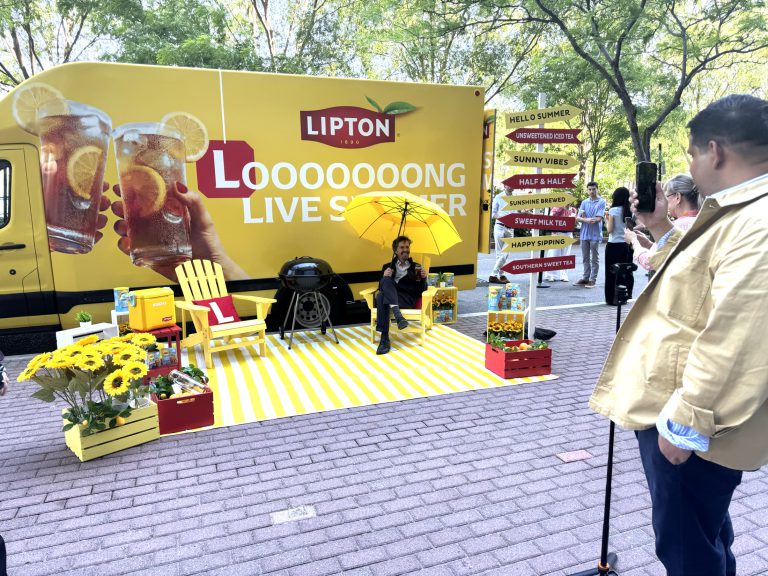
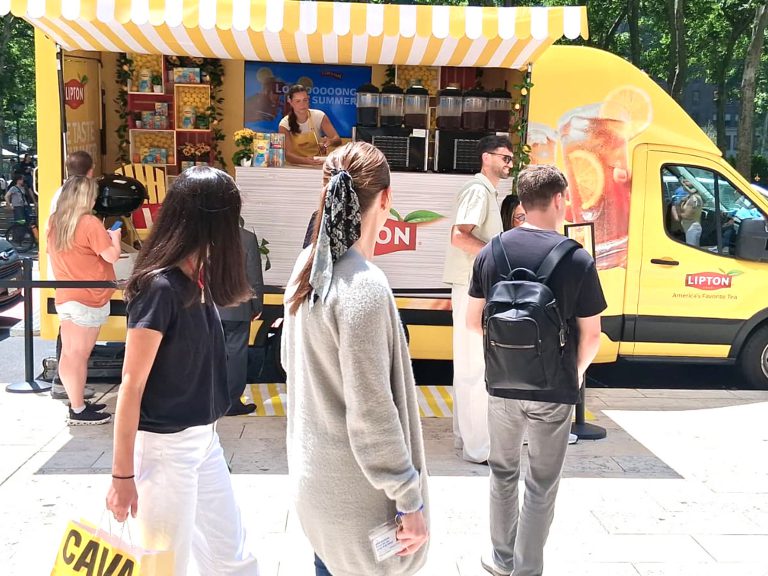
The Lipton truck and lounge at Bryant Park, and the line at the service window.
B2B and tech roadshows
A private room for demos and executive briefings outside conferences and customer offices. Example: AI on Wheels, the DDN AI Factory Tour with NVIDIA and Supermicro. Read our tech roadshow guide.
Retail and beauty launch tours
A store on wheels for product drops, merch and beauty launches. Example: Biodance, four cities with two custom vehicles. Read our beauty pop-up tour guide.

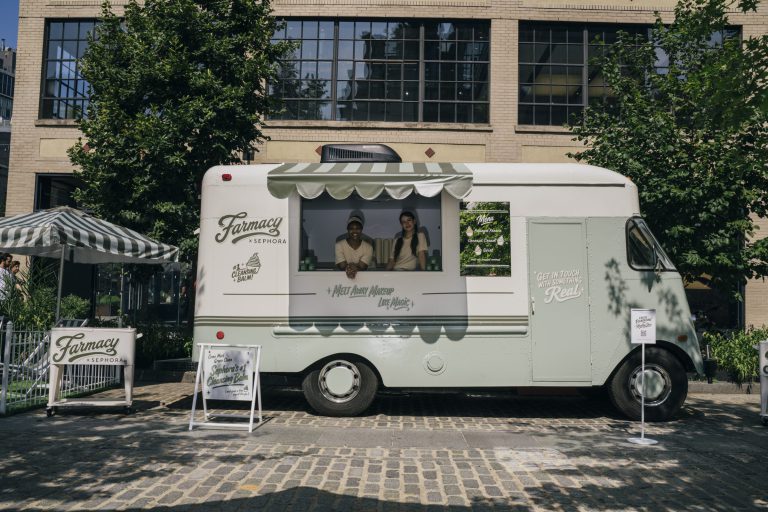
Inside the Biodance glass truck, and the Farmacy × Sephora froyo truck in Chelsea.
Sports and sponsorship tours
Fan experiences at stadiums and game days: the Quaker NFL mobile tour and the ESPN × WWE Danhausen Freeze Tour, an ice cream truck tour around SummerSlam.
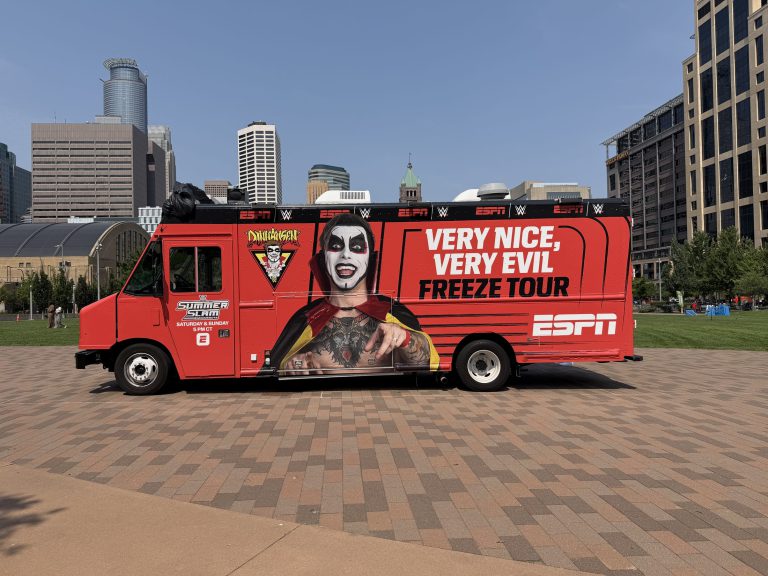
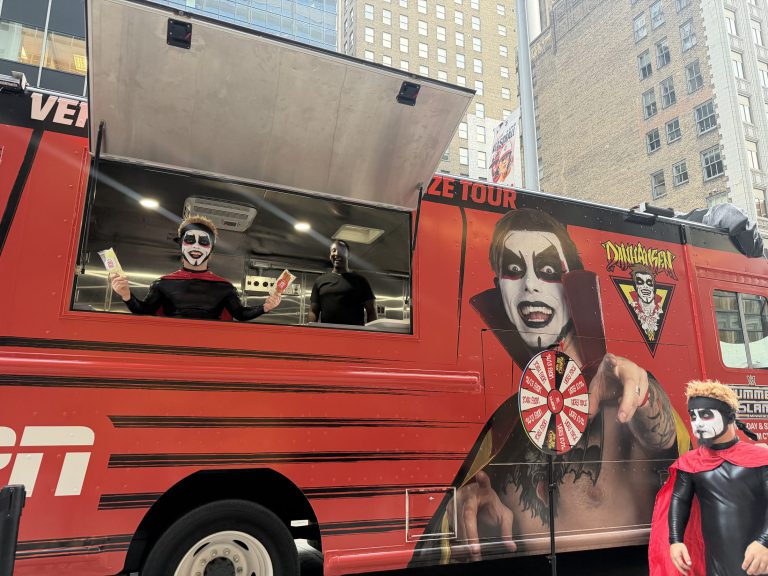
The Danhausen Freeze Tour truck and the service window during SummerSlam week.
Street and media moments
A vehicle built to be filmed and shared, like the Seedtag glass truck during Advertising Week.
Corporate and campus tours
A themed space that visits offices or universities, like the Snowflake ski-lodge school bus.
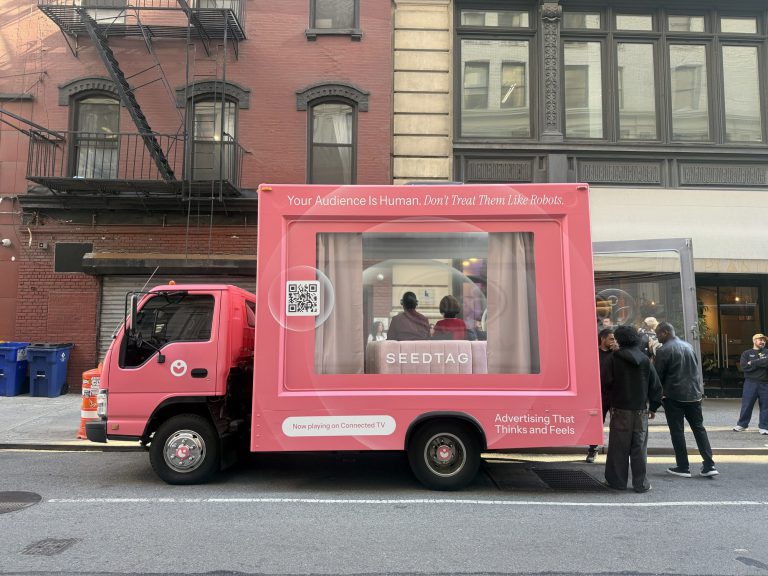
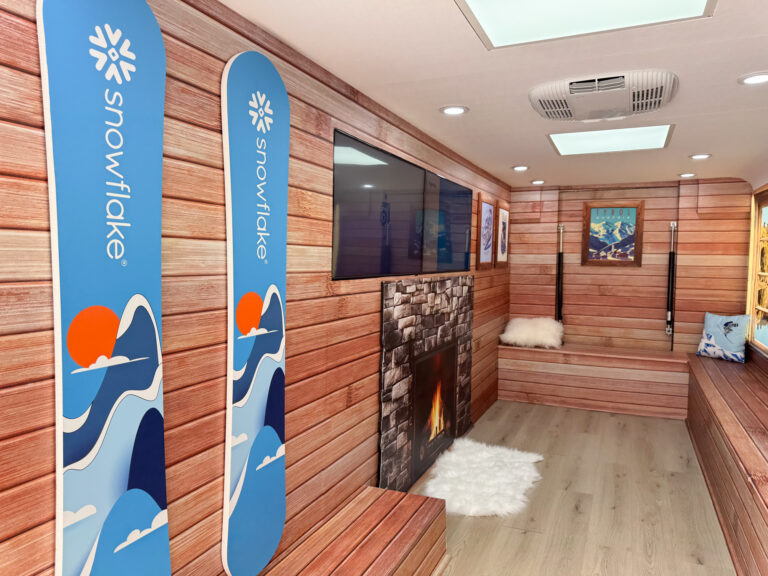
The Seedtag glass truck in Lower Manhattan, and the Snowflake bus interior.
Planning a tour? Send us your markets and dates and we will come back with vehicle options, a route and a timeline.
How to plan a mobile marketing tour, step by step
1. Define the goal of every stop
Pick one main measure: samples, demos booked, leads, sign-ups, sales, content or press. Everything else, from the vehicle to the staffing, follows from it.
2. Choose markets and locations
List the cities, then the kind of spot in each one: a flagship store, a campus, a stadium lot, a festival, a conference or a busy plaza. Location type decides the permits, the power you need and how long setup can take.
3. Pick the vehicle
Match the vehicle to what people do at the stop (see the comparison below). Renting from an existing fleet is faster and cheaper than building a new vehicle from scratch.
4. Design, approve and build
Expect 3D renders for approval, then fabrication, AV, graphics and the wrap. A custom build usually takes 6 to 10 weeks. Faster is possible: the DDN trailer went from concept to launch in 45 days.
5. Route, permit and schedule
Every city has different rules for street parking, sampling, sound, generators and alcohol. Book venues and file permits early, leave travel days between far-apart stops, and plan where the vehicle is stored and serviced on the road.
6. Staff it
A tour needs drivers, a setup crew, brand ambassadors, technical staff and a tour manager who travels with it. Keeping one core crew for the whole route keeps the experience the same in every city.
7. Measure and adjust
Count visitors, samples, demos and sign-ups at every stop, collect photo and video, and compare markets as you go so later stops can be improved.
Case study: an NFL tour across six cities
For Quaker’s NFL program we built and ran a branded promo van and fan setup that traveled to six NFL cities and two Super Bowl events. Each stop opened with a branded stage, turf, photo moments, games and sampling for fans on game day.
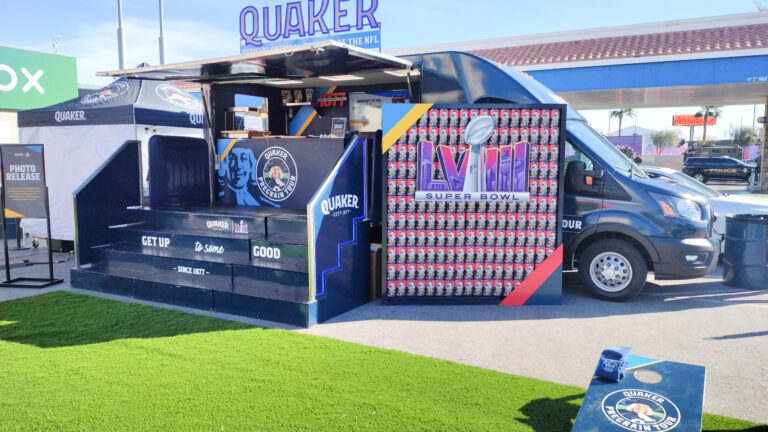
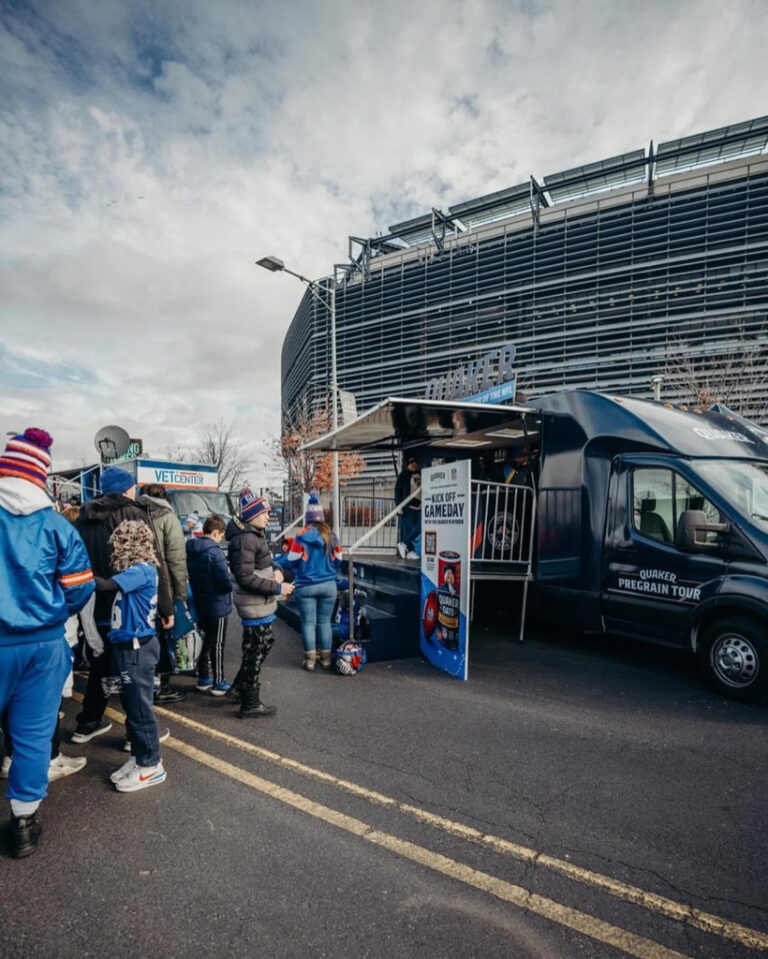
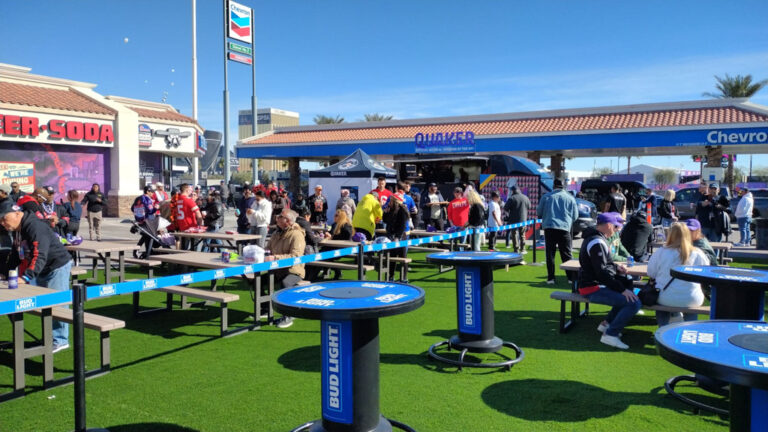
The Quaker setup at the Super Bowl, a stadium stop and the fan zone.
See the Quaker NFL mobile tour for the full gallery.
Planning timeline
- 10 to 12 weeks out: goals, markets, budget and vehicle choice
- 8 to 10 weeks out: design and renders approved, build starts, permits filed
- 4 to 6 weeks out: fabrication, AV and wrap; venues confirmed; staff booked
- 1 to 2 weeks out: test setup, content loaded, product and samples ready
- On tour: setup, activation and strike at each stop, with daily reporting
What does a mobile marketing tour cost?
Tours are quoted per project because the inputs vary so much. The main cost drivers are:
- The vehicle, and whether it is rented from a fleet or built new
- The build: interior fabrication, AV, graphics and wrap
- The number of cities, stops and travel days
- Permits, venue fees and insurance in each market
- Staffing, travel and lodging
- Product, samples, food and drink
The biggest saving usually comes from renting a vehicle that already exists and rebranding it, instead of buying and building one.
Choosing a vehicle for your tour
- Expandable trailer: a 16′ × 38′ room with a glass storefront, LED wall and rooftop deck. Best for B2B roadshows, demos, hospitality and pop-up retail.
- Glass truck: a lit set behind glass that people watch from the sidewalk. Best for street visibility, performers and product reveals.
- Food truck or vintage truck: best for sampling food and drinks.
- Airstream: a photogenic lounge or shop for beauty, fashion and hospitality.
- School bus or promo van: a themed interior that travels between offices, campuses and events.

How to measure a mobile marketing tour
- Visitors and dwell time at each stop
- Samples served or products sold
- Demos, leads and sign-ups captured with QR codes or tablets
- Social posts, tags and press coverage
- Cost per engagement, compared market by market
When a tour is not the right fit
If your audience is in one city on one day, a single pop-up build or a one-day truck activation is usually the better spend. Tours pay off when the same experience can travel to several markets and the build cost is spread across every stop.
Mobile marketing tour checklist
- One clear goal per stop
- Markets and location types chosen
- Vehicle selected: rent or build
- Renders approved
- Permits and venues booked for every city
- Crew, drivers and tour manager confirmed
- Product, samples or menu ready
- Tracking and reporting set up
- Strike and storage plan for the end of the tour
Frequently asked questions
What is a mobile marketing tour?
A mobile marketing tour is a branded vehicle or structure that travels a planned route and becomes an activation at each stop, so one experience reaches several cities as a single campaign.
How far in advance should we plan a mobile tour?
Ten to twelve weeks is comfortable for a custom build and multi-city permits. Tours that use an existing fleet vehicle can launch faster.
Is it cheaper to rent or build a tour vehicle?
Renting and rebranding an existing vehicle is almost always faster and cheaper than buying and building one, and there is nothing to store when the tour ends.
How many stops can a tour do in a week?
It depends on the distance between cities and the setup time. A van or food truck can do a stop a day in one region; a large trailer usually needs a travel day between far-apart cities.
Who handles permits in each city?
We file street, park and venue permits for every stop as part of the tour, along with sampling and generator approvals where they are needed.
Which vehicle is best for a sampling tour?
A food truck, vintage truck or promo van with a service window works best for food and drink sampling, because it keeps the line moving and holds the product cold or hot.
NVS Visuals designs, builds and runs mobile marketing tours in-house: we own the fleet, fabricate the interiors, print the wraps, file the permits and staff every stop. See our mobile marketing tours, or send us your markets and dates.